


Products
News
- ▶ Aluminum/Alloy 3 Axles Tanker Aluminium Semi Trailer
- ▶ Aluminum Tanker Trailer for Sale Price
- ▶ Aluminum Alloy Oil Tanker Truck Is Better Than Carbon Steel Oil Tanker Truck
- ▶ Preventing Product Contamination in Stainless Steel Oil Semi Trailer Tanks
- ▶ 304 vs. 316 Stainless Steel for Oil Semi Trailers: Where Each Grade Fits
Aluminum Tanker Trailer for Sale Price
A quoted aluminum tanker trailer price can look attractive until the buyer compares what is actually included: tank volume, compartment layout, alloy grade, vapor recovery equipment, suspension, brake configuration, and the documentation needed for the intended cargo. This is where purchase decisions often go wrong. Two trailers may both be described as “45,000-liter aluminum tankers,” yet one may be equipped for routine fuel distribution while the other carries components that better suit multi-product loading, rough-road operation, or vapor-controlled unloading.
For buyers searching for an aluminum tanker trailer for sale price, the practical answer is that price should be evaluated as a specification package, not as a single capacity-based number. The lowest quotation may exclude equipment that becomes necessary before the trailer can enter service. A useful comparison begins with the transport route, liquid type, loading pattern, local operating requirements, and the towing tractor already in the fleet.
Start with the operating job, not the advertised capacity
Aluminum tanker trailers are commonly selected where lower tare weight, corrosion resistance, and efficient payload are important. That does not mean every aluminum tanker should be configured in the same way. A highway fuel distribution route with frequent station deliveries requires different details from a trailer carrying one liquid between terminals, or a unit operating on uneven regional roads.
Before requesting a price, define the conditions that influence the real build cost:
- Liquid carried: petrol, diesel, aviation fuel, chemicals, edible liquids, or another compatible product may require different valves, seals, internal arrangements, and safety equipment.
- Delivery pattern: one large discharge point may work with fewer compartments, while retail distribution usually benefits from separate compartments for different grades or destinations.
- Route quality: paved long-haul roads, terminal yards, city delivery areas, and unpaved access roads place different demands on suspension, axle layout, tires, and chassis reinforcement.
- Payload restrictions: allowable gross combination weight and axle-load rules affect the useful payload more than tank volume alone.
- Loading and unloading system: bottom loading, top loading, gravity discharge, pumping arrangements, API fittings, and vapor recovery can alter both price and operating workflow.
A trailer with excessive capacity for the legal payload limit can leave the operator paying for tank volume that cannot be fully used. Conversely, a basic low-cost configuration may become inefficient when a distributor has to make repeated deliveries of several fuel grades in a single trip.
What changes the aluminum tanker trailer price
The tank shell is a major cost component, but it is not the only one. Aluminum alloy selection and thickness should be reviewed together. A thicker shell can improve structural reserve, while end plates, baffles, weld quality, and tank support design all influence how the body behaves under repeated loading, braking, and road vibration. Buyers should ask for these details in the written specification rather than relying only on exterior photos.
Compartment quantity also affects pricing. More compartments generally mean more bulkheads, manholes, piping routes, valves, sensors, and assembly work. They are valuable when a truck must separate products or delivery allocations, but they add complexity. The right question is not “How many compartments are best?” but “How many separate loads must this trailer reliably deliver on a normal route?”
Safety and emissions-related equipment can create an important price difference. A vapor recovery system, for example, is not merely an optional visual feature. It is relevant where vapor handling is part of terminal or unloading practice. Similarly, ABS, brake type, landing gear arrangement, grounding provisions, emergency shut-off components, and hose storage should be compared item by item. A quote that says “complete tanker trailer” without an equipment schedule is difficult to evaluate fairly.
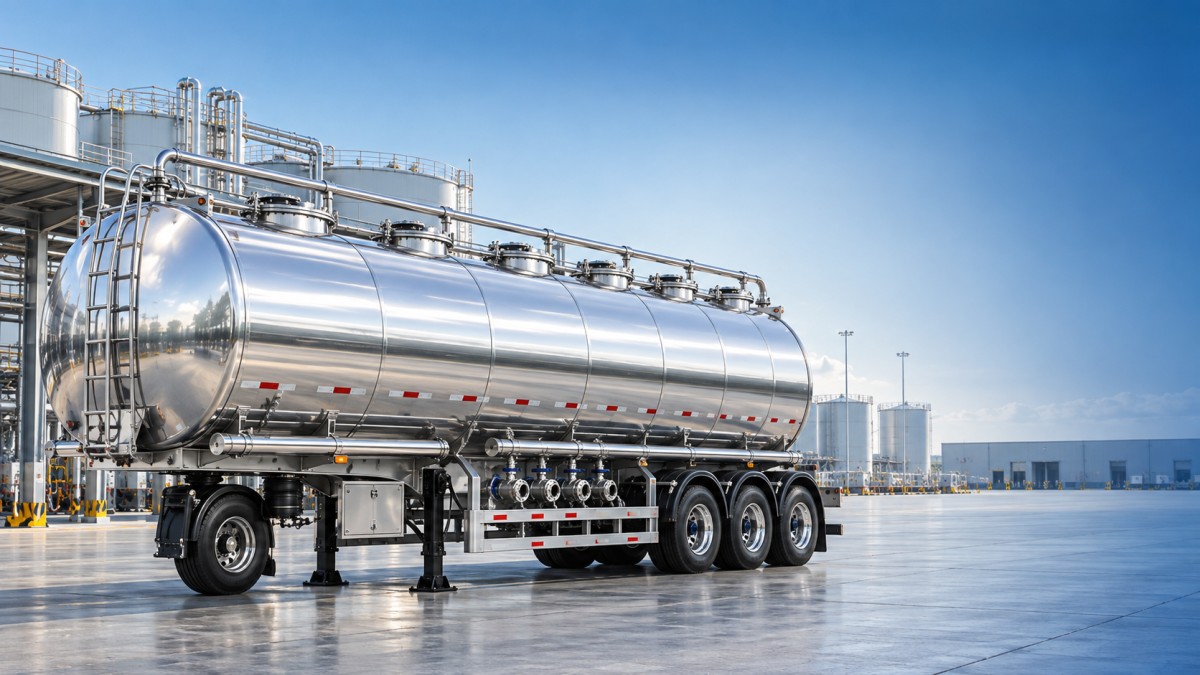
Running gear is another area where a low initial price can conceal a weaker long-term fit. Axle capacity, air or mechanical suspension, lift axle arrangement, tire specification, brake configuration, and kingpin size should match the tractor and expected load. Replacing unsuitable tires or modifying a suspension after delivery is usually more disruptive than choosing the suitable configuration before production.
Read quotations as technical documents
When comparing suppliers, place each quotation into a simple side-by-side table. Do not compare only the total amount and stated tank volume. Ask each supplier to confirm whether the following items are included, optional, or excluded.
It is also worth clarifying the commercial basis of the quotation. A factory price, port-delivered price, and destination-delivered price are not interchangeable. Freight charges, port handling, customs duties, local inspection requirements, registration work, and accessories installed after arrival can materially change the final budget. Request that these elements be stated separately instead of assuming they are covered.
A practical specification example
For an operator needing a large-volume road tanker with multiple delivery options, a configuration such as the 45 m³ 6-Compartment Painted Aluminum Alloy Tanker with Vapor Recovery System shows why the advertised volume alone does not explain the price. Its 45,000 L capacity is divided into six compartments, allowing separation of loads. The tank uses 5454 aluminum alloy, with a 5.5 mm tank body and 7 mm end plates. Those material and structural details should be part of any serious quotation comparison.
The running gear specification is equally relevant: three 13-ton axles, 315/80R22.5 tires, tri-axle air suspension with a front lift axle, drum brakes, ABS, manual slack adjusters, linked-operation landing gear, and a 50# bolt-on kingpin. The unit also includes a vapor recovery system. Whether every one of these features is needed depends on the operating environment, but their inclusion explains why such a trailer should not be compared directly with a simplified tanker of similar nominal capacity.
Where buyers often underestimate cost
The first mistake is selecting a tank layout before confirming the daily delivery pattern. A six-compartment trailer can be useful for varied dispatches, but it may be unnecessary for a dedicated single-product route. On the other hand, choosing too few compartments can create operational delays, extra journeys, or product allocation problems that outweigh the initial saving.
The second mistake is treating aluminum as a complete answer to durability. Alloy tankers offer important weight and corrosion-related advantages, but their service life still depends on sound fabrication, suitable supports, correct loading practices, compatible cargo, and timely maintenance. A buyer should inspect the stated alloy, thicknesses, internal baffle arrangement, weld appearance, and mounting structure rather than simply asking whether the tank is aluminum.
A third issue is overlooking serviceability. Tires, brake parts, valves, suspension components, landing gear, and electrical items need to be maintainable where the trailer operates. A technically capable component can still become a poor choice if replacement parts are difficult to obtain or if local technicians are unfamiliar with its setup. This is especially important where trailers operate far from major service centers.
Questions to settle before placing an order
Use the final discussion with the supplier to remove assumptions. Confirm the exact cargo, total volume, compartment capacities, loading method, discharge arrangement, and the type of vapor recovery connection required. Check the external dimensions against depot access, loading rack clearance, bridge restrictions, and parking space. Verify kingpin compatibility with the tractor fifth wheel and ensure the planned axle loads work with the intended payload.
Ask for a complete technical drawing or specification sheet showing tank dimensions, material thickness, compartment division, axle positions, suspension type, valve arrangement, and included accessories. If the tanker will handle flammable liquids or regulated chemical products, the operator should also confirm the applicable destination requirements before fabrication begins. Changes after the tank is built are more expensive and can affect delivery timing.
The strongest aluminum tanker trailer purchase is usually not the lowest initial offer. It is the quotation that clearly matches the required cargo, route, delivery pattern, and service conditions, with every included component identified. That approach makes the price easier to compare and reduces the risk of receiving a trailer that is inexpensive on paper but costly to adapt for actual work.
Get Quote Form
Please complete the form below, and our product experts will contact you within one business hour. All inquiry details are kept strictly confidential and used solely to provide you with a precise solution.
✅ 24/7 Engineer Online Support | Ready for any technical inquiries.
✅ Full Export Documentation Support | We provide full set of shipping documents to ensure smooth customs clearance.
LOGO
This stunning beach house property is a true oasis, nestled in a serene coastal community with direct access to the beach.
Opening Hours
Monday - Friday : 9AM to 5PM
Sunday: Closed
Closed during holidays
Contact
+18888888888
hezuo@eyingbao.com123 West Street, Melbourne Victoria 3000 Australia
Request a Free Quote Today
Need mainstream models or custom specs? Our engineers are ready.
Contact us today for a lasting partnership!