


Products
News
- ▶ Which dangerous goods rules apply to a six-compartment oil tanker?
- ▶ How aluminum tanker weight affects allowable fuel payload
- ▶ How to confirm the tank volume in a 50 m2 fuel tanker listing
- ▶ When is a four-compartment carbon steel tanker a practical choice?
- ▶ How does corrosion develop inside a carbon steel fuel tanker?
How aluminum tanker weight affects allowable fuel payload
How aluminum tanker weight affects allowable fuel payload
Every kilogram of tanker weight can affect how much fuel a fleet is legally permitted to carry. For business evaluators, assessing a 45 m2 6-CompartmentAluminum Alloy Oil TankerSemi-Trailer means looking beyond tank capacity to understand the relationship between tare weight, axle limits and local gross vehicle weight regulations. Aluminum construction can reduce the weight of the tank structure, but the commercial benefit depends on the complete vehicle, the fuel being carried and the routes it must use.
There is also a specification issue worth resolving at the outset: fuel tank capacity is normally expressed in cubic metres or litres, not square metres. If “45 m2” is intended to mean 45 m³, ask for that to be confirmed in the approved drawings and capacity documents. A typographical error in an enquiry should not become an assumption in a purchasing decision.
Tank capacity is not the same as legal payload
The volume of a tank describes the space available for liquid. Allowable payload describes the mass of product that can be carried without exceeding the applicable limits. Those are related, but they are not interchangeable.
For an initial gross-weight calculation, subtract the operating mass of the empty tractor and trailer combination from the applicable gross combination weight limit. The operating mass should reflect the vehicle as it will actually leave the depot: tractor fuel, driver, equipment, hoses, fire extinguishers and any other items included in the journey. Use the terminology and weighing conventions required by the relevant authority, since “tare” is not always defined consistently in quotations.
The result is a gross-weight payload ceiling, not necessarily the amount that may be loaded. Individual axle limits, axle-group limits, tyre ratings, vehicle ratings, route restrictions and tank filling requirements can reduce it further. The legal limit is determined by the most restrictive applicable condition, not by whichever figure looks most favourable in a brochure.
To convert a mass allowance into an approximate volume, divide the allowable fuel mass by the product density in kilograms per litre. Use the density and temperature basis relevant to the loading operation. Petrol, diesel and other fuels need not have the same density, and density changes with temperature. A calculation based on the wrong product or an unexplained reference temperature can produce an unreliable loading plan.
What a lighter aluminum tank can—and cannot—deliver
Aluminum is less dense than carbon steel, so an appropriately engineered aluminum tank can be lighter than a comparable steel construction. The weight difference for complete trailers, however, cannot be calculated from material density alone. Shell thickness, internal reinforcement, compartment arrangement, running gear, piping, ladders, fittings and design requirements all contribute to the finished weight.
If gross combination weight is the binding constraint, every kilogram removed from the operating vehicle can theoretically make room for up to one additional kilogram of fuel. That exchange only works while there is usable tank volume and while axle, component and operational limits remain satisfied. A lighter trailer is not automatically a higher-volume delivery.
For example, suppose two otherwise comparable combinations are limited by gross weight and the aluminum version has a verified operating mass 1,000 kg lower. Its gross-weight calculation would allow up to 1,000 kg more fuel. At an assumed density of 0.80 kg per litre, that is 1,250 litres. This is an illustration, not a quoted weight saving or a fuel specification. The actual gain could be smaller—or zero—if the tank is already at its permitted fill level or an axle reaches its limit first.
The reverse is also possible: an operator may prefer to carry the same litres while keeping more margin under a weight limit. That margin can be useful when tractor fuel, equipment or product density varies between trips. It should not replace accurate loading and weighbridge checks.
Six compartments make axle distribution a purchasing issue
A six-compartment tanker gives a fleet flexibility to separate products and make multiple deliveries. It also creates more possible loading arrangements. Two loads with the same total mass can place different forces on the tractor and trailer axles because the liquid is positioned differently along the vehicle.
Fuel in forward compartments generally contributes differently to kingpin and tractor axle loading than fuel in rear compartments. The actual distribution depends on compartment positions, axle spacing, fifth-wheel position, suspension and the tractor itself. An axle-load calculation should therefore use the proposed combination and the intended loading sequence—not just an assumed equal split across six compartments.
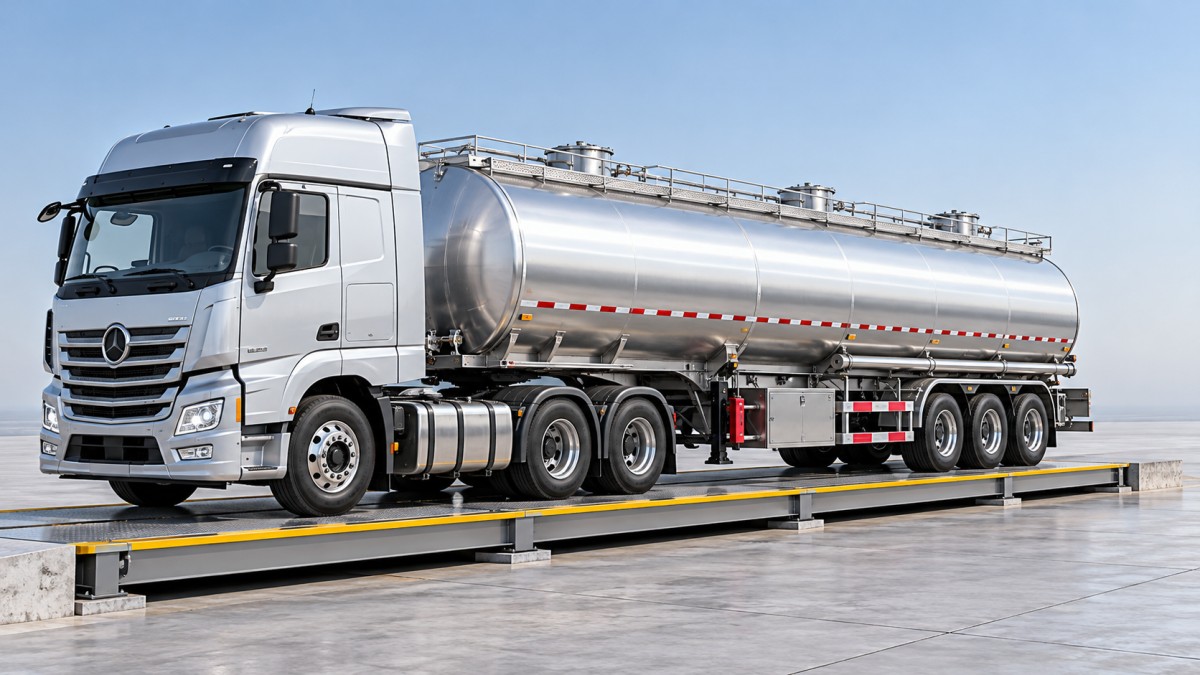
Partial deliveries deserve particular attention. A truck may leave the terminal within all limits but become poorly balanced after one compartment is emptied. Ask for checks covering the full load, plausible part-load configurations and the order in which compartments will be discharged. Operational procedures must also account for liquid movement and any applicable restrictions on partial filling; safe fill conditions should be confirmed against the tank design and local requirements.
Component ratings are not a substitute for those checks. Three axles rated at 13 tonnes each, for instance, do not establish a legal 39-tonne trailer axle-group allowance on every road. Applicable law, axle spacing, tyres, suspension and the actual load distribution can impose lower limits. The tractor’s axle and fifth-wheel ratings still matter.
Compare aluminum and steel on the same operating basis
A material comparison is useful only if the alternatives are reasonably comparable. A larger aluminum tanker and a smaller steel tanker may have different compartment volumes, dimensions and equipment, so a difference in quoted tare cannot be attributed solely to shell material. Request a weight breakdown or, preferably, a verified complete-trailer weight for the specified configurations.
As a separate reference point, the 40 m³ 6-Compartment Carbon Steel Tanker Semi-Trailer has a stated 40,000-litre capacity, a 5 mm carbon steel tank shell and 6 mm carbon steel end plates. Its listed configuration includes three 13-tonne-rated axles and tri-axle air suspension with a front lift axle. Those details help define a steel option for evaluation; they do not establish its tare weight or prove a payload difference against a 45 m³ aluminum design.
The lift axle, too, needs operational context. Its use depends on the load, equipment settings and applicable rules. A buyer should not assume that lifting an axle is appropriate or permitted when the tanker is loaded, or that it changes the legal capacity of the combination.
Beyond purchase price, compare expected maintenance arrangements, local repair capability and parts availability. Aluminum repairs require appropriate expertise and procedures; steel also has its own inspection and corrosion-management needs. Neither material eliminates the need to confirm compatibility with the intended products and maintenance environment. The better choice is the one the fleet can operate and support under its actual conditions.
Turn weight savings into a workable business case
The financial question is not simply how much lighter one trailer might be. It is how much additional product can be carried on trips where weight currently limits the load, and whether that extra volume changes the number of journeys, delivery schedules or revenue. If customers normally order less than the available capacity, a payload advantage may remain unused.
Build the comparison using representative routes and actual dispatch patterns. Include the tractor that will be coupled to the trailer, likely product densities, terminal loading rules and the typical delivery sequence. Then compare the resulting legal litres per trip with the cost of each configuration. Where an aluminum design costs more, the decision depends on whether the usable operating benefit is sufficient over the intended service period; a theoretical maximum alone is not a payback calculation.
Route details can change the result. Operators serving East Africa, West Africa or Saudi Arabia should verify requirements for the specific countries, roads and border crossings involved rather than assume one regional weight limit. Road restrictions, enforcement practices and documentation requirements need confirmation with the relevant authorities and local transport specialists. The same trailer may face different practical limits on different assignments.
What to confirm before approving the design
A useful quotation should make its weight assumptions visible. Ask the manufacturer which equipment is included in the quoted trailer mass, whether the figure is an estimate or a measured weight, and how manufacturing tolerances and optional equipment are treated. Confirm the tractor specification separately; a trailer-only tare cannot establish the payload of a complete combination.
The approval package should also identify total and individual compartment capacities, the applicable permitted filling levels, overall dimensions from approved drawings, axle spacing and expected kingpin load. Request an axle-load assessment for the proposed tractor and realistic loading patterns. Before commissioning, compare the finished combination’s weighbridge readings with the assumptions and resolve any discrepancy before setting routine loading limits.
Shandong ORNN Vehicle Co., Ltd. manufactures fuel and chemical tanker trailers alongside other semi-trailer types and has 17 years of industry experience. For fleets and distributors evaluating a configuration, the productive next step is to provide the intended tractor details, products, delivery sequence and operating routes. Those inputs allow a proposed design to be assessed against usable payload and local requirements, rather than judged on tank volume or material alone.
Get Quote Form
Please complete the form below, and our product experts will contact you within one business hour. All inquiry details are kept strictly confidential and used solely to provide you with a precise solution.
✅ 24/7 Engineer Online Support | Ready for any technical inquiries.
✅ Full Export Documentation Support | We provide full set of shipping documents to ensure smooth customs clearance.
LOGO
This stunning beach house property is a true oasis, nestled in a serene coastal community with direct access to the beach.
Opening Hours
Monday - Friday : 9AM to 5PM
Sunday: Closed
Closed during holidays
Contact
+18888888888
hezuo@eyingbao.com123 West Street, Melbourne Victoria 3000 Australia
Request a Free Quote Today
Need mainstream models or custom specs? Our engineers are ready.
Contact us today for a lasting partnership!