


Products
News
- ▶ Why Insulation Matters When Transporting Palm Oil in a 38 m3 Tanker
- ▶ 20 m2 Two-Compartment Fuel Tankers: Features That Matter to Resellers
- ▶ Planning Fleet Routes with a 20 m2 2-Compartment Fuel Tanker Truck
- ▶ Fuel Segregation and Discharge Controls for 20 m2 Two-Compartment Tankers
- ▶ Evaluating Compartment Split Ratios in a 20 m2 Fuel Tanker Truck
Why Insulation Matters When Transporting Palm Oil in a 38 m3 Tanker
Why Insulation Matters When Transporting Palm Oil in a 38 m3 Tanker
For project managers responsible for edible-oil logistics, a tanker is not simply a large vessel on wheels. It is part of a temperature-sensitive handling system that connects refinery output, storage terminals, distribution depots, and end users. Palm oil may travel through intense daytime heat, cool nights, port queues, unplanned roadside stops, and long unloading windows. Under those conditions, insulation is not a cosmetic addition to the trailer. It helps protect cargo flow, unloading reliability, and the project schedule built around both.
A 38 m3 Stainless Steel InsulatedPalm Oil Tanker is intended to reduce the rate at which the product gains or loses heat during transport. That distinction matters. Insulation does not actively heat cargo by itself, and it cannot correct a loading temperature that was unsuitable from the start. Its job is to slow temperature change, giving operators a more stable product condition when the tanker reaches its destination.
The operational problem is viscosity, not just temperature
Palm oil becomes more difficult to pump and discharge as it cools and thickens. The exact handling temperature depends on the specific oil grade, processing condition, customer requirements, and local operating practice. Still, the project risk is familiar: cargo that was manageable at loading may become slow-moving by the time it reaches the receiving facility.
When discharge slows down, the consequences spread beyond the tanker bay. Pumps may operate longer than planned. Drivers and vehicles remain occupied. Receiving tanks may not be available for the next delivery. If product residue remains in the tanker because flow is poor, cleaning and turnaround become more difficult. In a multi-vehicle program, a few delayed discharge events can disrupt daily fleet allocation.
This is why insulation should be assessed as a logistics-control measure. It reduces exposure to ambient temperature swings and helps preserve the cargo condition established before dispatch. For routes with predictable short transit times and consistently warm conditions, the required insulation level may be modest. For longer routes, overnight parking, high-altitude travel, or destinations where unloading is often delayed, the need becomes more compelling.
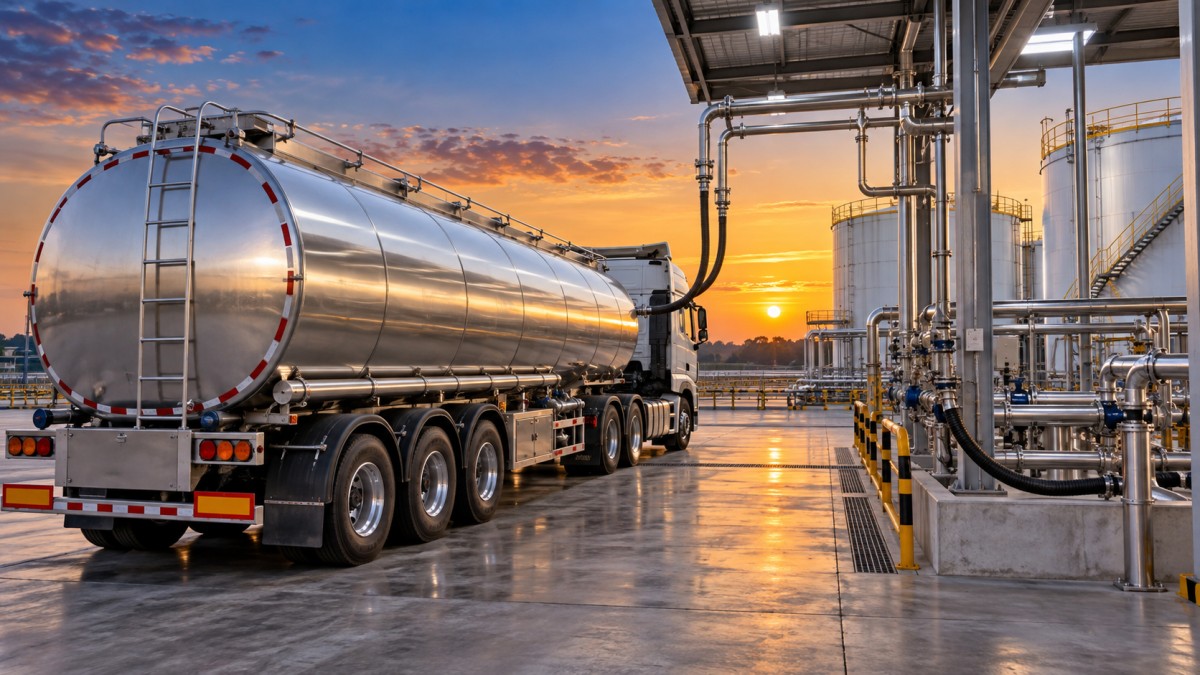
A 38 m3 tanker must be specified as a system
Capacity alone does not determine whether a palm oil trailer will work well in the field. A 38 m3 configuration may suit a project because it balances shipment volume with route limits, available tractor power, depot space, or receiver storage capacity. But insulation performance depends on the complete tank arrangement: tank material, insulation medium and thickness, external cladding, manhole design, piping layout, outlet position, and the quality of joints around areas where heat can escape.
Stainless steel is commonly considered for edible-oil contact surfaces because cleanliness and resistance to contamination are central concerns. Yet stainless steel alone is not the answer to temperature retention. Project teams should ask how the insulation layer is protected from moisture, vibration, road debris, and repeated washdown. Damaged cladding or poorly sealed penetrations can reduce insulation effectiveness over time, even when the tanker initially appears well built.
The discharge arrangement deserves the same attention. A well-insulated shell cannot fully solve a problem caused by an undersized outlet, an unsuitable valve configuration, or piping that loses heat quickly. If the receiving site uses pumping equipment, confirm the connection standard, hose routing, expected pumping method, and whether the unloading process creates avoidable low-temperature points in the line.
Insulation works best when loading and unloading are managed properly
One common mistake is treating an insulated tanker as a substitute for operating discipline. It is not. Cargo should be loaded within the temperature range required by the product owner or receiving facility. The hatch should remain closed except when operations require access. Long waiting periods should be planned into the temperature-risk assessment rather than treated as exceptional events.
Before approving a tanker specification, it is useful to map the actual route and handover process. Consider loading delays, ferry or border crossings, overnight parking, security checks, terminal congestion, road surface conditions, and unloading hours. A route that looks straightforward on a map may have several points where a loaded tanker sits stationary for long periods. These are often the moments when insulation proves its value.
Project managers should also define responsibility for temperature checks. A practical procedure may include recording the cargo condition at loading, confirming it at delivery when needed, and investigating recurring deviations. The method and acceptance limits should come from the cargo owner’s handling requirements, not from assumptions about trailer capacity.
Questions worth raising before design approval
A clear technical discussion before fabrication can prevent expensive changes later. The following points are especially relevant for palm oil transport projects:
- What is the usual loading temperature, and what condition must the product retain at the receiving point?
- What is the longest realistic transit and waiting time, rather than the planned driving time?
- Will the tanker require heating provisions, or is insulation alone sufficient for the route and product?
- Which fittings, seals, hoses, and cleaning procedures are compatible with edible-oil service?
- What axle-load limits, road conditions, and terminal access restrictions apply to the selected volume?
- How will the insulation cladding be inspected and repaired during the tanker’s working life?
These questions also help distinguish a genuine project requirement from an over-specified design. A more complex system can add weight, cost, maintenance demands, and operational dependencies. The goal is not to add every available feature; it is to select the combination that keeps product handling reliable under the route’s real conditions.
Why tanker experience across liquid categories still matters
Although palm oil and fuel are handled under different cargo requirements, projects in both sectors face similar trailer-level questions: structural durability, compartment or tank layout, suspension suitability, kingpin selection, outlet access, and maintenance under demanding roads. This broader perspective is useful when a fleet operator manages several liquid transport streams or when a dealer supports mixed tanker applications.
For example, a fuel tanker is designed around a different cargo and safety context, but its chassis decisions can still inform discussions about fleet duty cycles and road conditions. The 50 m³ 4-Compartment Carbon Steel Fuel Tanker uses a three-axle arrangement, a 90# bolt-on kingpin, and heavy-duty suspension with 70 mm pins. Its four compartments support multi-product fuel transport, while its 5 mm carbon-steel tank shell and 6 mm end plates reflect the different material choices used for fuel service. Those parameters should not be transferred directly to edible-oil transport, but they illustrate why tanker projects must separate cargo-contact requirements from chassis and operational requirements.
Shandong ORNN Vehicle Co., Ltd. has spent 17 years manufacturing semi-trailers and transport equipment for fuel, chemical liquids, general cargo, and heavy equipment. Its product range includes tanker trailers, dump semi-trailers, flatbeds, and lowbeds. For operators in East Africa, West Africa, and Saudi Arabia, equipment discussions often need to account for more than nominal capacity: road quality, climate, service access, local loading practice, and the practical demands placed on fleet maintenance teams.
Do not overlook cleaning, contamination control, and repairs
An insulated edible-oil tanker should remain serviceable after repeated cleaning cycles. Access points need to support safe inspection and cleaning without creating unnecessary thermal weak points. Seals, valves, and internal surfaces should be considered in the maintenance plan because a temperature-stable delivery is of limited value if product integrity is compromised by poor cleaning practice or unsuitable previous cargo use.
External inspection matters as well. Loose cladding, damaged protective sheeting, or water entering the insulation area can gradually change the trailer’s performance. Maintenance teams should be able to identify and repair these issues before they become visible as repeated unloading delays. This is particularly relevant where trailers operate on rough roads or spend extended periods outdoors.
The practical decision
For a palm oil project, insulation should be justified by the expected temperature exposure and the consequences of difficult discharge—not by a generic preference for a higher-specification tanker. A 38 m3 insulated stainless steel tanker can be a sensible solution when it supports stable product flow across long or variable journeys, while still fitting route, payload, and receiving-site constraints.
Before finalizing the trailer, align the tank design with the product owner’s handling instructions, the actual transport timeline, unloading equipment, and local requirements. That process turns insulation from an item on a specification sheet into a practical safeguard against delayed deliveries, avoidable residue, and disrupted edible-oil operations.
Get Quote Form
Please complete the form below, and our product experts will contact you within one business hour. All inquiry details are kept strictly confidential and used solely to provide you with a precise solution.
✅ 24/7 Engineer Online Support | Ready for any technical inquiries.
✅ Full Export Documentation Support | We provide full set of shipping documents to ensure smooth customs clearance.
LOGO
This stunning beach house property is a true oasis, nestled in a serene coastal community with direct access to the beach.
Opening Hours
Monday - Friday : 9AM to 5PM
Sunday: Closed
Closed during holidays
Contact
+18888888888
hezuo@eyingbao.com123 West Street, Melbourne Victoria 3000 Australia
Request a Free Quote Today
Need mainstream models or custom specs? Our engineers are ready.
Contact us today for a lasting partnership!