


Products
News
- ▶ Carbon Steel Tank Protection Requirements for 42 m2 Fuel Tanker Trailers
- ▶ Single-Compartment Fuel Tankers: When Higher Payload Improves Fleet Economics
- ▶ Is a 42 m2 Single-Compartment Carbon Steel Fuel Tanker Right for Bulk Hauls?
- ▶ Demand Drivers for Insulated Palm Oil Tankers in Food Logistics Markets
- ▶ Avoiding Palm Oil Solidification During Long-Haul Tanker Transportation
Carbon Steel Tank Protection Requirements for 42 m2 Fuel Tanker Trailers
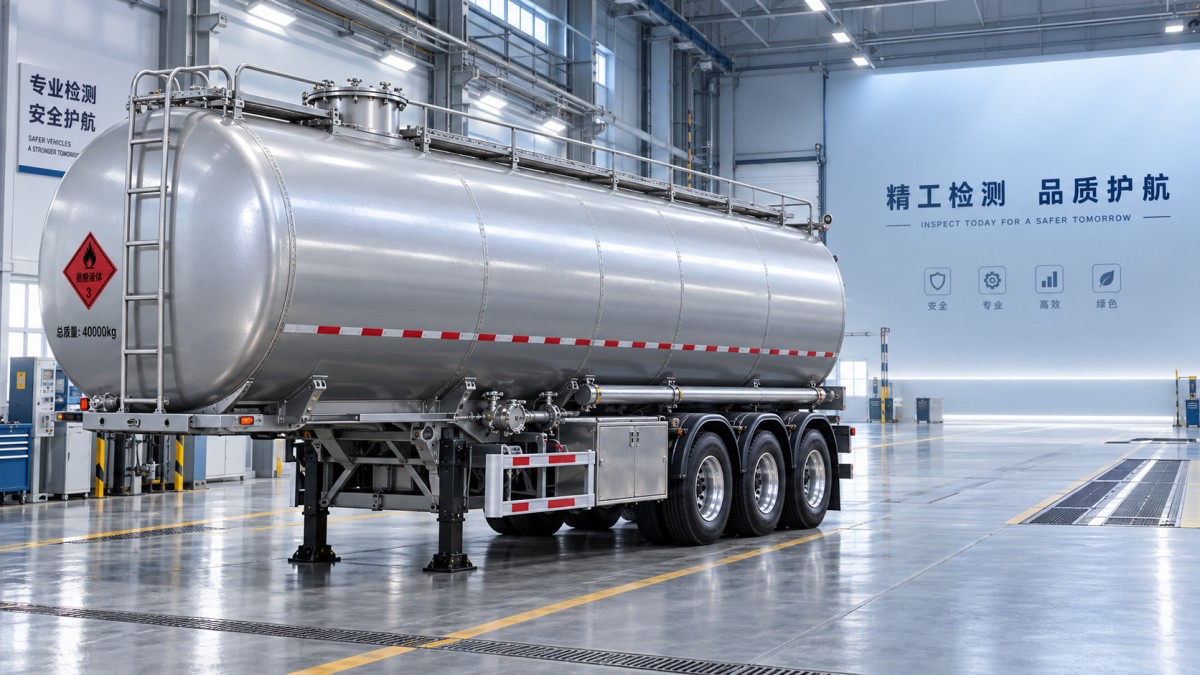
For quality-control and safety managers, protecting a 42 m2 Single-CompartmentCarbon Steel Fuel Tanker is not simply a painting or maintenance task. It is a control system that begins with steel selection and fabrication, continues through coating, inspection, and road service, and ends only when the tank is safely retired or refurbished. A missed weld defect, damaged manhole seal, or overlooked coating blister can become a fuel leak, product contamination event, fleet interruption, or regulatory exposure.
Before reviewing protection measures, confirm how “42 m2” is used in the purchase specification. Tank capacity is more commonly stated in cubic metres or litres, while square metres may describe external surface area. Quality documents, drawings, inspection plans, and operating permits should use one unambiguous unit. This small clarification prevents major misunderstandings about tank volume, coating quantity, payload, and inspection scope.
Protection starts before the tank is built
Carbon steel remains a practical material for fuel tanker trailers because it offers strength, availability, repairability, and a familiar fabrication process. Yet carbon steel has no inherent resistance to corrosion. Its service life depends heavily on how well moisture, oxygen, road salts, and contaminated fuel are kept away from bare steel.
The first protection requirement is traceable material control. Tank shell plates, end plates, baffles or surge-control components, reinforcement rings, and structural attachments should be identifiable from receiving inspection through fabrication. The QC team should verify material grade, thickness, heat or batch traceability where required, and plate condition. Steel with deep pitting, laminations, excessive rust, oil contamination, or damaged edges should not enter production without evaluation.
Thickness is not only a structural issue. It is also a corrosion allowance issue. A tank may pass initial dimensional checks yet lose useful life quickly if the selected thickness leaves little tolerance for internal water-related corrosion or external coating damage. The approved design basis should define minimum thicknesses, allowable fabrication tolerances, and any corrosion allowance required by the applicable transport rules and customer specification.
Welding quality is a leak-prevention requirement
Most serious tank failures do not begin as a dramatic rupture. They often start at a weld toe, a nozzle connection, a poorly sealed attachment, or an area where fabrication heat and surface preparation were not properly controlled. For a single-compartment fuel tanker, the absence of separate internal compartments does not reduce the need for careful weld discipline; the full fuel load and surge forces still act on the tank body, end closures, and internal structures.
A practical inspection plan should cover:
- Approved welding procedures and qualified welders for pressure-retaining tank work.
- Fit-up checks before welding, including root gaps, alignment, cleanliness, and plate edge condition.
- Visual inspection of completed welds for undercut, overlap, porosity, incomplete fusion, cracks, and arc strikes.
- Non-destructive examination at the locations and extent defined by the governing code, customer requirement, or risk assessment.
- Leak or pressure testing using a controlled procedure, with safe test pressure, calibrated gauges, hold times, and recorded results.
Weld spatter, sharp edges, and abrupt transitions deserve attention even when they do not affect leak testing. These features make coating application less reliable and create places where water and dirt can remain trapped. Grinding and finishing should be controlled so that the correction itself does not reduce plate thickness below the approved limit.
External coating must be treated as a barrier system
On a fuel tanker trailer, the outside of the tank is exposed to rain, road splash, salt-laden air in coastal regions, dust abrasion, ultraviolet light, stone impact, and frequent washing. A glossy finish at delivery is not evidence of long-term protection. The important question is whether the entire coating system was prepared, applied, cured, and inspected under controlled conditions.
Surface preparation should remove rust, mill scale, welding residues, salts, oil, and dust to the specified cleanliness level. The target profile must also suit the coating manufacturer’s recommendation; too little anchor profile can weaken adhesion, while an unsuitable roughness can leave high points insufficiently covered. Preparation quality is especially important around weld seams, supports, ladders, handrails, mounting brackets, and drain-prone areas.
The coating specification should identify the primer, intermediate coat where used, topcoat, required dry-film thickness, curing conditions, and repair procedure. Inspectors should record ambient temperature, steel temperature, humidity, and dew-point margin during application. Painting steel that is too close to the dew point invites condensation beneath the coating, even if the surface looks dry to the eye.
Dry-film thickness measurements should be taken systematically rather than only on easy, flat areas. Check difficult zones: lower shell sections behind wheels, support interfaces, seams, corners, and areas near access fittings. Where a coating system is intended to provide a continuous barrier, holiday detection or other integrity testing may be appropriate, provided the test method and voltage are compatible with the coating type and thickness.
Do not overlook the inside of the fuel tank
Internal corrosion is often less visible and more consequential. Water can enter through poor-quality fuel, condensation, damaged seals, open access covers, or inadequate cleaning practices. Once water settles at the bottom of a carbon steel tank, it may promote corrosion, sediment formation, and microbial activity. Those by-products can block filters, affect fuel quality, and accelerate wear in downstream equipment.
The protection strategy should define whether the tank interior is left as properly cleaned bare steel or uses an approved internal lining. This choice cannot be made on appearance alone. Any lining must be chemically compatible with the intended fuel, additives, cleaning agents, temperature range, and loading/unloading process. An incompatible lining can soften, detach, or contaminate the product.
For unlined carbon steel tanks, cleanliness and drainage discipline become more important. Ensure that low points, drain arrangements, valves, and internal geometry permit effective removal of water and residue. After hydrostatic testing or washing, the tank must be thoroughly dried before fuel service. Residual test water is a common and avoidable starting point for internal corrosion.
Seals, valves, and fittings need their own inspection logic
A protected tank shell does not guarantee a protected tanker. Manhole covers, emergency vents, bottom-loading or discharge valves, pipework, gaskets, caps, and flange faces are all potential leakage paths. These components should be selected for fuel compatibility and checked for secure installation, correct gasket compression, smooth operation, and resistance to vibration.
Pay particular attention to interfaces between dissimilar materials. Fasteners, brackets, and fittings can create galvanic corrosion conditions when moisture is present. Suitable isolation, compatible material pairing, sealed joints, and regular inspection reduce this risk. Protective guards should also be assessed for drainage: a guard that traps mud and water can accelerate corrosion in the very area it was meant to protect.
A field inspection schedule should follow real operating exposure
Protection is lost gradually in service. Drivers may notice a stone-chip area, a wet fitting, or a loose cap before it becomes a reportable defect, so daily walk-around checks are valuable. The safety manager’s role is to make those checks specific enough to be useful: look for coating damage, seepage, stained areas, damaged valve protection, missing fasteners, abnormal tank movement, and signs of water accumulation.
At planned maintenance intervals, inspect the underside, suspension-adjacent areas, tank supports, weld regions, and lower shell zones more closely. Measure or assess corrosion where damage is evident, repair exposed steel promptly, and document the location so recurring failures can be identified. A pattern of damage behind a wheel, near a support saddle, or beside a hose rack may indicate a design or operational issue rather than isolated bad luck.
Inspection frequency should increase for trailers operating in coastal East or West African environments, during wet seasons, on unpaved routes, or in fleets where wash water and road debris remain on the chassis for extended periods. Saudi Arabian operations may face a different combination of high heat, dust abrasion, UV exposure, and temperature cycling. The protection principle remains the same, but the failure pattern may differ.
Common shortcuts that create expensive problems
One common mistake is treating surface preparation as a cosmetic stage that can be rushed to meet a delivery date. Another is applying repair paint over corrosion without removing the affected material and feathering the surrounding sound coating. Both approaches can hide deterioration for a short time while allowing corrosion to continue underneath.
It is also risky to assume that a passed pressure test proves long-term tank integrity. Pressure testing confirms a condition at a moment in time; it does not verify coating adhesion, drainage quality, future vibration resistance, or the condition of seals after repeated loading cycles. A complete acceptance package should therefore combine test records with material documents, weld inspection results, coating records, thickness readings, and a clear maintenance handover.
Build protection requirements into the procurement checklist
When approving a 42 m2 Single-CompartmentCarbon Steel Fuel Tanker, ask the manufacturer to provide a tank-specific inspection and test plan rather than relying on a general statement of quality. The plan should show hold points for material receipt, fit-up, welding, non-destructive examination where applicable, leak testing, surface preparation, coating application, final inspection, and documentation review.
Material decisions should always reflect the cargo and temperature profile. Carbon steel may be appropriate for conventional fuel service when properly protected, while higher-temperature or chemically demanding liquids may require a different construction approach. For example, a purpose-built 16 m³ Stainless Steel Insulated Molten Sulfur Tanker uses 304 stainless steel and insulation for molten-sulfur transport, illustrating why tanker material and protection systems must match the liquid being carried rather than follow a one-material rule.
The best result is not a tanker that merely looks finished at dispatch. It is a documented, inspectable tank protection system that gives operators confidence through loading cycles, rough roads, changing weather, and demanding distribution schedules. For QC and safety teams, that confidence comes from disciplined fabrication control, verified coating integrity, clean internal conditions, and maintenance actions taken before minor damage becomes a loss of containment.
Get Quote Form
Please complete the form below, and our product experts will contact you within one business hour. All inquiry details are kept strictly confidential and used solely to provide you with a precise solution.
✅ 24/7 Engineer Online Support | Ready for any technical inquiries.
✅ Full Export Documentation Support | We provide full set of shipping documents to ensure smooth customs clearance.
LOGO
This stunning beach house property is a true oasis, nestled in a serene coastal community with direct access to the beach.
Opening Hours
Monday - Friday : 9AM to 5PM
Sunday: Closed
Closed during holidays
Contact
+18888888888
hezuo@eyingbao.com123 West Street, Melbourne Victoria 3000 Australia
Request a Free Quote Today
Need mainstream models or custom specs? Our engineers are ready.
Contact us today for a lasting partnership!