


Products
News
- ▶ Is a 42 m2 Single-Compartment Carbon Steel Fuel Tanker Right for Bulk Hauls?
- ▶ Demand Drivers for Insulated Palm Oil Tankers in Food Logistics Markets
- ▶ Avoiding Palm Oil Solidification During Long-Haul Tanker Transportation
- ▶ Cleaning Standards for Food-Grade Stainless Steel Palm Oil Tanker Trailers
- ▶ Estimating Heat Loss and Delivery Costs for 38 m3 Palm Oil Tanker Routes
Demand Drivers for Insulated Palm Oil Tankers in Food Logistics Markets
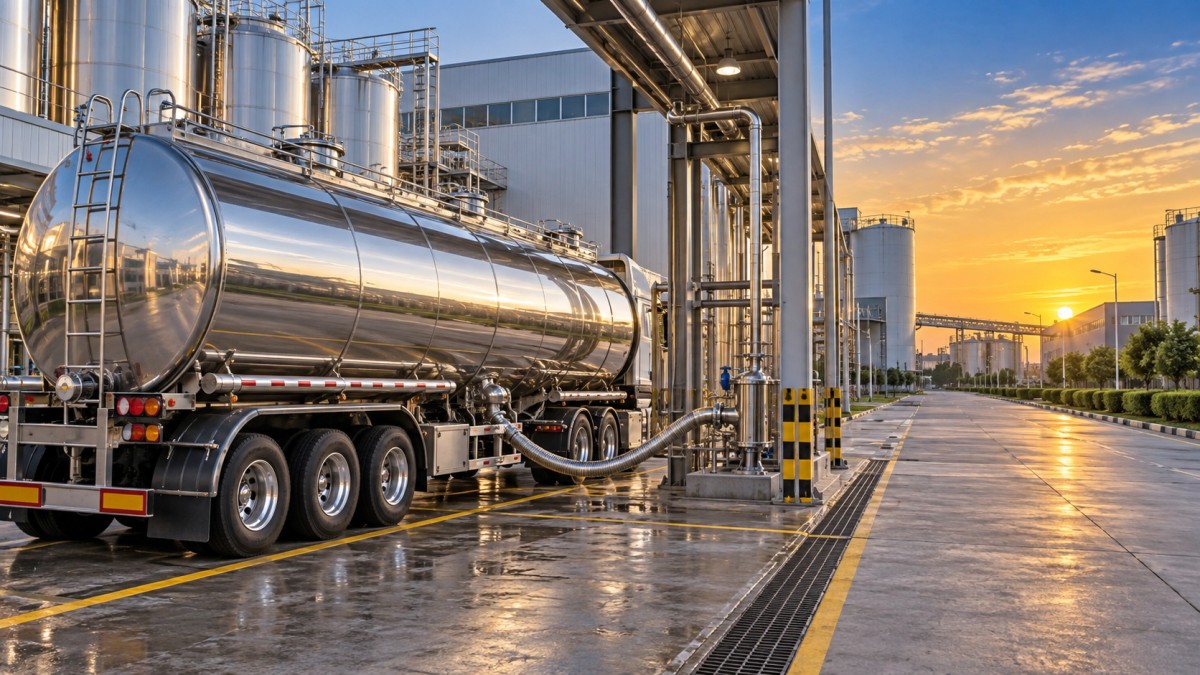
A 38 m3 Stainless Steel Insulated Palm Oil Tanker is usually justified by transport conditions rather than by cargo volume alone. When palm oil moves through hot climates, long road corridors, variable unloading schedules, or smaller receiving sites, maintaining a manageable product temperature can protect delivery reliability and reduce avoidable handling costs. The strongest demand comes from supply chains where a standard non-insulated tanker creates operational uncertainty: delayed discharge, difficult pumping, extended cleaning time, or product quality disputes between sender and receiver.
Palm oil is not handled like a dry bulk commodity. Its flow characteristics change with temperature, and different grades or blends can require different handling windows. A tanker specification that looks economical at purchase can become expensive if the cargo arrives too cool to unload efficiently or if the receiving facility must spend extra time and energy bringing the product back into a pumpable condition. This is why insulated food-grade tankers are becoming more relevant in edible oil logistics across African and Saudi Arabian markets.
Why insulated palm oil transport demand is growing
The underlying driver is a change in how edible oils are distributed. More product is moving in bulk from ports, refineries, storage depots, and processors to packaging plants, food manufacturers, and regional distribution points. These routes do not always offer fast turnaround. A vehicle may wait for a loading slot, stop overnight, encounter road delays, or arrive at a site with limited discharge capacity. In each case, the cargo remains inside the tank longer than the planned transit time.
Insulation does not actively heat the oil, but it slows temperature loss. That distinction matters during procurement. An insulated tanker is valuable when the main challenge is preserving cargo temperature already achieved during loading. If the cargo routinely needs substantial reheating during transport, insulation alone may not be sufficient; the buyer should assess whether a heating system, suitable heating medium, and safe temperature-control process are needed.
Food logistics is also placing more attention on cargo separation and traceability. Palm oil may be supplied to food processing, bakery, frying, confectionery, soap, and oleochemical operations. Although the cargo itself is familiar, the receiving operation may have strict expectations about cleanliness, previous cargoes, valves, seals, and discharge records. This makes the construction and cleaning design of the tank as commercially important as its nominal capacity.
Why 38 m3 is often a practical commercial size
A 38 m3 tanker occupies a useful middle ground in bulk edible oil transport. It can support larger deliveries than a small rigid tank truck while remaining more practical for routes where payload limits, road quality, depot layouts, and customer storage capacities vary. The right capacity is not simply the largest tank that can be manufactured. It should match the volume that can be legally carried, safely discharged, and regularly sold through the route.
For procurement planning, the most useful question is: how often will the tanker leave with a full, economically viable load and return for its next load without excessive idle time? A larger vessel can lower transport cost per litre when it consistently runs full and unloads quickly. It becomes less attractive when customers accept partial deliveries, access roads restrict larger units, or the truck spends long periods waiting at sites with small storage tanks.
Tank geometry also affects usable capacity. Head shape, internal arrangements, manholes, piping, insulation thickness, and the specified safe fill level all influence how the stated volume translates into real operations. Buyers should compare complete drawings and operating capacity assumptions, not only a headline figure such as 38 m3.
Stainless steel is a cargo-quality decision, not only a material upgrade
For food-grade palm oil, stainless steel is commonly selected because it offers a smooth, cleanable internal surface and avoids the corrosion concerns associated with less suitable materials. However, “stainless steel tanker” is not enough information for a serious quotation comparison. The grade of stainless steel, shell and end-plate thickness, weld finish, internal fittings, drainage arrangement, and access points should all be reviewed together.
A poorly designed discharge system can leave residual oil in low points and make cleaning slower. In food service, that residue can matter more than a minor difference in tank purchase price. The same applies to gaskets, hoses, valve materials, and the ability to inspect the tank interior. Components exposed to cargo should be appropriate for edible-oil service and should be available through a practical replacement channel.
Insulation adds another layer of design choices. Buyers should ask what insulation material is used, how it is protected from water intrusion and road damage, and how the outer cladding is finished. Insulation that is poorly sealed can lose effectiveness over time, particularly where the trailer operates in heavy rain, frequent washing conditions, coastal air, or rough-road environments.
Purchase price is only one part of the cost equation
Two insulated palm oil tankers can appear similar in a quotation while having very different ownership costs. The lower-priced trailer may use a lighter structure, simpler suspension, lower-cost valves, or an insulation system with less durable external protection. That may be acceptable for short, predictable routes with good roads and modest annual mileage. It is a weaker choice when the tanker will operate on long-haul routes, carry high-value food cargo, or remain in service over many loading cycles.
The most common buying mistake is comparing only tank volume, stainless steel description, and the final quoted price. A more useful comparison separates the tank body from the chassis and running gear, then identifies which components are local-service items and which may require longer lead times. For a food tanker, downtime can affect both freight revenue and customer confidence.
Route conditions decide whether insulation delivers value
Insulation makes the strongest business case when loading and unloading temperatures are reasonably controlled but transit and waiting time are unpredictable. It can reduce the rate at which the cargo loses heat while the trailer is moving or parked. This matters on routes with long distances between terminals, high temperature variation between day and night, traffic delays, or limited unloading hours.
It is less useful to assume that insulation automatically solves a cold-cargo problem. If oil is loaded below the desired handling temperature, or if the journey and waiting period are much longer than the thermal design can support, the receiving point may still face discharge difficulties. In those situations, the tanker's insulation, heating arrangement, loading temperature, route duration, and receiving-site equipment must be considered as one operating system.
Before selecting a configuration, map the normal trip rather than the ideal trip: loading time, road time, security stops, border or gate delays, overnight parking, queue time, and discharge time. This often reveals whether the purchase should focus on insulation only, insulation plus heating capability, or a different delivery model with smaller and more frequent loads.
Questions that should be resolved before placing an order
- What palm oil grade or blend will be transported, and what temperature condition is needed for practical unloading?
- Will the tanker be dedicated to edible oils, or will it alternate between products? Dedicated service generally simplifies cleaning control.
- Does the receiving site unload through gravity, a pump, or a fixed transfer system?
- Are site entrances, turning areas, bridge limits, and storage-tank capacities suitable for the chosen trailer size?
- Will the operating route justify a heating system, or is heat retention the actual requirement?
- Which chassis components can be serviced locally, including brakes, axles, suspension parts, tyres, and landing gear?
- What inspection, cleaning, and discharge documentation will the cargo owner require?
These questions prevent a frequent mismatch: buying a technically sound tanker that is not suited to the actual loading and unloading network.
Food-grade tanker demand is broader than palm oil alone
The same trend toward controlled bulk liquid logistics is visible in other food applications. Milk, edible oils, syrups, and similar products place different demands on temperature management, hygiene, compartment design, and cleaning access. A product designed for one cargo should not be treated as automatically interchangeable with another, but comparing these applications can clarify what needs to be specified.
For example, a 20 m³ Stainless Steel Insulated Milk Tanker Truck uses a 316L stainless steel tank body and has three compartments for insulated milk transport. Its 20,000 L capacity and compartment arrangement illustrate why food tanker procurement should start with the delivery pattern and cargo-handling process, rather than with a generic tank design. Palm oil operations may require a different capacity, thermal arrangement, and discharge configuration even when both products need hygienic stainless steel construction.
Shandong ORNN Vehicle Co., Ltd. manufactures tanker trailers and other transport equipment for fuel, chemical liquid, general cargo, and heavy-equipment applications. When evaluating a food-grade tanker supplier, the practical value lies in converting route, cargo, and servicing requirements into a clear build specification: tank material, insulation, discharge layout, chassis configuration, and documentation should all be aligned before production begins.
The market signal to act on
Demand for insulated palm oil tankers is being driven less by a preference for premium equipment and more by the cost of unreliable bulk distribution. As edible oil supply chains extend beyond major terminals and buyers expect cleaner, more predictable deliveries, tankers must support cargo condition as well as transport volume.
For a 38 m3 stainless steel insulated palm oil tanker, the sound procurement decision is based on the route’s temperature exposure, average waiting time, unloading method, payload constraints, and expected service support. When those conditions are clear, insulation becomes a measurable operating choice rather than an expensive specification added without a defined purpose.
Get Quote Form
Please complete the form below, and our product experts will contact you within one business hour. All inquiry details are kept strictly confidential and used solely to provide you with a precise solution.
✅ 24/7 Engineer Online Support | Ready for any technical inquiries.
✅ Full Export Documentation Support | We provide full set of shipping documents to ensure smooth customs clearance.
LOGO
This stunning beach house property is a true oasis, nestled in a serene coastal community with direct access to the beach.
Opening Hours
Monday - Friday : 9AM to 5PM
Sunday: Closed
Closed during holidays
Contact
+18888888888
hezuo@eyingbao.com123 West Street, Melbourne Victoria 3000 Australia
Request a Free Quote Today
Need mainstream models or custom specs? Our engineers are ready.
Contact us today for a lasting partnership!