


Products
News
- ▶ Carbon Steel Tank Protection Requirements for 42 m2 Fuel Tanker Trailers
- ▶ Single-Compartment Fuel Tankers: When Higher Payload Improves Fleet Economics
- ▶ Is a 42 m2 Single-Compartment Carbon Steel Fuel Tanker Right for Bulk Hauls?
- ▶ Demand Drivers for Insulated Palm Oil Tankers in Food Logistics Markets
- ▶ Avoiding Palm Oil Solidification During Long-Haul Tanker Transportation
Single-Compartment Fuel Tankers: When Higher Payload Improves Fleet Economics
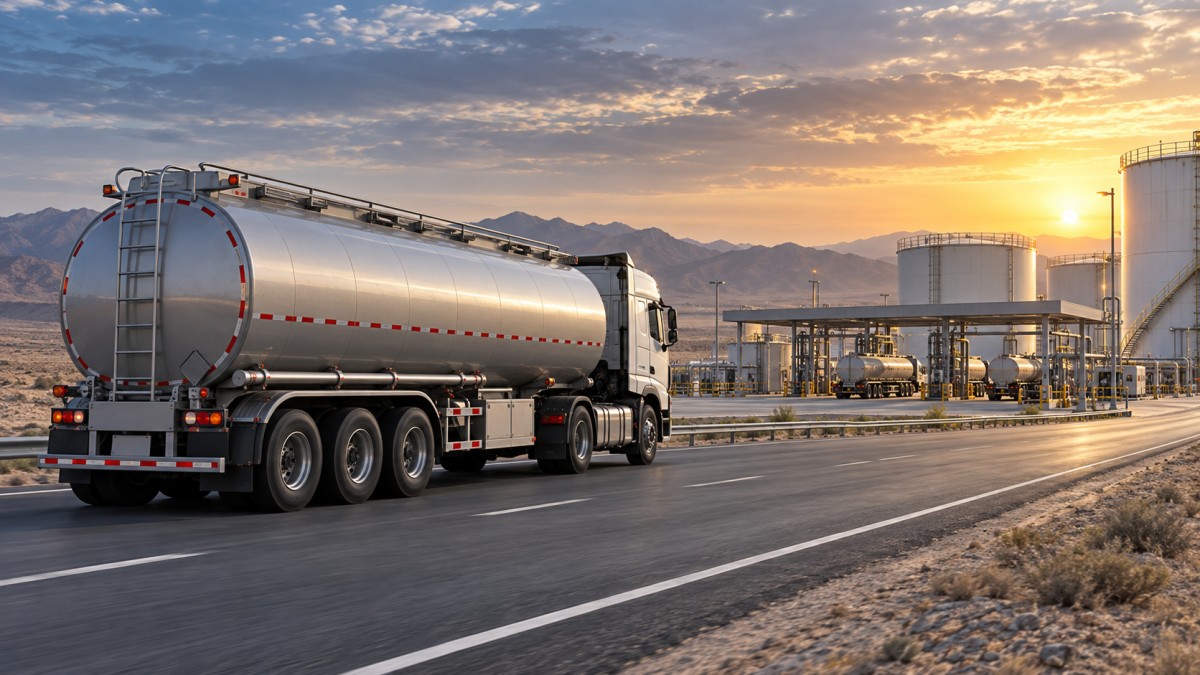
For fleet operators focused on fuel distribution, a 42 m2 Single-CompartmentCarbon Steel Fuel Tanker can deliver more than high-volume capacity—it can improve payload efficiency, simplify loading operations, and reduce cost per transported liter. For transport companies, oil distributors, and logistics fleets operating across demanding regional routes, selecting the right tanker configuration is a strategic investment rather than a routine equipment purchase.
The key question is not whether a single-compartment tanker carries more fuel on paper. It is whether that extra usable volume translates into fewer trips, lower handling time, and more dependable revenue on the routes that matter to the business. In many dedicated fuel-delivery operations, the answer is yes. In mixed-product distribution, however, a multi-compartment layout may still be the better economic choice.
Why a Single Compartment Can Create a Payload Advantage
Every compartment inside a tanker introduces structure: internal bulkheads, separate outlet arrangements, additional valves, piping, manholes, and product-management components. Those features are necessary when a vehicle must carry different fuels on the same trip, but they also add weight and consume usable tank volume.
A single-compartment carbon steel fuel tanker has a simpler internal arrangement. With fewer internal divisions, a greater proportion of the tank body can be used for one product. For fleets moving diesel, gasoline, kerosene, or another approved fuel grade from a depot to a large customer, this can mean more saleable liters per journey within applicable gross vehicle weight limits.
The improvement is not unlimited. Road regulations, tractor weight, axle configuration, fuel density, and permitted gross combination weight always set the real ceiling. Still, where legal payload is not already reached, reducing unnecessary tare weight and internal hardware can improve the load carried per trip.
For a manager reviewing fleet utilization, the useful metric is not simply tank capacity. It is:
Delivered liters per trip ÷ total trip cost.
A tanker that carries a larger practical payload while taking the same driver time, route distance, toll cost, and dispatch effort can improve that ratio quickly.
The Economics Become Clear on Dedicated Routes
Single-compartment designs are most compelling when the distribution pattern is predictable. Consider a fleet serving mining sites, power plants, construction projects, agricultural operations, industrial yards, or large fuel stations that regularly order one fuel type in substantial volume. A truck may load one product at the terminal, make one or several deliveries of that same product, and return for the next cycle.
In this environment, compartment flexibility can become unused complexity. The fleet is not being paid for its ability to separate six products; it is being paid to move a high volume of one product safely and consistently.
Higher payload can influence fleet economics in several practical ways:
- Fewer trips for the same monthly volume: Reducing even a small number of repeat runs can lower fuel consumption, tire wear, driver hours, and exposure to road delays.
- Lower cost per delivered liter: Fixed trip costs are spread across more fuel volume, particularly on longer routes between depots and remote customers.
- Faster terminal operations: One product, one loading process, and fewer compartment checks can make loading procedures more straightforward.
- Simpler inventory planning: Dispatch teams can align tankers with dedicated fuel lanes instead of constantly reassigning equipment around changing compartment requirements.
- Potentially easier maintenance planning: Fewer compartment-specific fittings and pipelines may reduce inspection points, although all valves, seals, and safety equipment still require disciplined maintenance.
These benefits matter especially in East Africa, West Africa, and Saudi Arabia, where long-haul fuel routes may include variable road conditions, high ambient temperatures, terminal queues, and remote delivery points. A productive tanker is not just one that loads quickly at the depot; it is one that completes its route safely with minimal avoidable downtime.
Before Comparing Prices, Confirm What “42 m2” Means
Procurement teams should verify the capacity unit in every quotation and specification sheet. Tanker capacity is normally stated in cubic meters (m³) or liters, while square meters (m²) measure area. If a request refers to a “42 m2 Single-CompartmentCarbon Steel Fuel Tanker,” clarify whether the intended requirement is a 42 m³ tanker, a dimensional reference, or an internal company naming convention.
This may sound minor, but misunderstandings at the specification stage can create expensive consequences later. A nominal 42 m³ tank may have a different legal payload outcome depending on material thickness, chassis configuration, axle ratings, suspension, accessories, and the density of the fuel being transported. Procurement should compare usable capacity and compliant payload—not capacity figures alone.
When a Multi-Compartment Tanker Still Makes Better Financial Sense
The single-compartment option is not automatically the lowest-cost answer. It becomes less attractive when customers need several products in smaller quantities on the same route. A distributor supplying diesel, petrol, and kerosene to multiple retail stations may need compartment separation to avoid product mixing and avoid dispatching several vehicles for one delivery round.
In that case, the higher tare weight of a multi-compartment tanker may be justified by route consolidation. The economic comparison should consider the number of customer stops, product mix, typical order size, delivery frequency, and the cost of sending additional trucks.
For example, a six-compartment tanker can support multi-product distribution and operational flexibility. Where vapor emissions management is part of the procurement requirement, equipment such as the 45 m³ 6-Compartment Painted Aluminum Alloy Tanker with Vapor Recovery System provides a different operating model: separate compartments, a 45,000-liter total capacity, vapor recovery capability, ABS, and a tri-axle air suspension configuration with a front lift axle. It is not a substitute for a dedicated single-product tanker; it is an alternative for fleets whose revenue depends on serving varied product demand in one route cycle.
The decision is therefore about route architecture. Dedicated bulk movements favor simplicity and capacity. Multi-stop, multi-grade distribution often rewards flexibility.
A Procurement Checklist That Goes Beyond Tank Volume
Decision-makers should ask suppliers for a specification package that makes total operating cost visible. The body material matters, but it is only one part of the equation.
1. Match carbon steel construction to the operating environment
Carbon steel is widely selected for fuel tanker trailers because it offers robust structural performance and can be economical to repair in markets with established steel-service capability. It is often a practical fit for rougher routes and operators who value straightforward maintenance access. The trade-off is weight: compared with aluminum alloy, carbon steel can reduce available payload under the same legal gross-weight limit. That does not eliminate its business case, but it makes weight calculations essential.
Ask about tank shell thickness, end-plate thickness, baffle arrangement, welding standards, corrosion protection, and paint system. External finish and internal cleanliness both affect service life. If the tanker will operate near coastal areas, in humid climates, or where road salt and water exposure are common, corrosion protection deserves close attention.
2. Review axle, suspension, and tire suitability as a system
A high-capacity fuel tanker places sustained demands on running gear. Axle ratings must align with the intended legal load, while suspension selection should reflect route quality and loading stability. Tire specification is equally important: a fleet may save money at purchase but lose it through premature wear, reduced availability, or difficult roadside replacement if the tire size is not practical for its operating region.
For long-distance fleet work, availability of service parts should be discussed before the order is placed. A tanker is only economically productive when brakes, landing gear, valves, electrical components, and suspension parts can be maintained without extended waiting time.
3. Treat safety equipment as part of utilization, not an add-on
Emergency valves, bottom loading or discharge arrangements, grounding provisions, anti-static systems, fire extinguisher brackets, ladder design, walkways, manholes, lighting, and braking systems should be specified according to local regulations and the fuel operator’s own safety procedures. Safety-related downtime, rejected terminal access, or a preventable incident can erase the savings gained from a lower initial purchase price.
Where required, vapor recovery provisions should also be evaluated at the system level: terminal compatibility, hose connections, operational procedures, inspection needs, and the local regulatory environment all matter.
Do Not Overlook Loading and Discharge Time
Fleet economics are often calculated around fuel consumption and payload, while waiting time receives less attention. Yet a tanker that spends hours in a terminal queue or at a delivery point is producing no revenue. The advantage of a single compartment is that loading and discharge procedures can be less complex when one product is involved. Fewer product switches may reduce the chance of loading the wrong grade or managing multiple delivery allocations under pressure.
That said, simplicity should not be confused with careless operation. Product compatibility, cleaning requirements, filling limits, venting, sealing, and documentation remain critical. A single-compartment tanker used for different products at different times needs a clear cleaning and changeover protocol to prevent contamination.
How to Build a More Realistic Cost Comparison
Rather than comparing only the purchase price of a single-compartment and multi-compartment trailer, model both options over the routes they will actually run. Use the fleet’s own data where possible:
- Average liters delivered per trip
- Annual kilometers and route distance
- Average terminal and customer waiting time
- Fuel consumption with loaded and empty travel
- Driver, maintenance, tire, and insurance cost per trip
- Expected product mix by customer segment
- Number of trips required to meet weekly demand
- Legal gross weight and axle-load restrictions on each key route
The result may show that a 42 m³-class single-compartment tanker needs fewer cycles to serve a dedicated contract. Or it may show that one flexible multi-compartment tanker replaces two less-utilized vehicles. Both outcomes are commercially valid; the better choice is the one that fits demand patterns without creating empty capacity or unnecessary trips.
The Practical Decision
A single-compartment carbon steel fuel tanker is strongest where volume is stable, product type is consistent, and customers receive fuel in bulk. For these fleets, higher usable capacity and a simpler operating process can reduce cost per transported liter and improve vehicle productivity.
For diversified retail distribution, compartment flexibility may outweigh the payload benefit. The most effective procurement decision begins with delivery data, not a generic tank specification.
With 17 years of experience manufacturing tanker trailers and transport equipment, Shandong ORNN Vehicle Co., Ltd. works with transport companies, oil distributors, liquid transport operators, and dealers to align tanker configurations with real operating conditions. For buyers, the goal should be clear: specify the tanker around the route, the fuel grade, the legal payload limit, and the service network—not simply the largest number printed on the tank.
Get Quote Form
Please complete the form below, and our product experts will contact you within one business hour. All inquiry details are kept strictly confidential and used solely to provide you with a precise solution.
✅ 24/7 Engineer Online Support | Ready for any technical inquiries.
✅ Full Export Documentation Support | We provide full set of shipping documents to ensure smooth customs clearance.
LOGO
This stunning beach house property is a true oasis, nestled in a serene coastal community with direct access to the beach.
Opening Hours
Monday - Friday : 9AM to 5PM
Sunday: Closed
Closed during holidays
Contact
+18888888888
hezuo@eyingbao.com123 West Street, Melbourne Victoria 3000 Australia
Request a Free Quote Today
Need mainstream models or custom specs? Our engineers are ready.
Contact us today for a lasting partnership!