


Products
News
- ▶ How Tank Material, Axles, and Safety Systems Affect Oil Tanker Trailer Prices
- ▶ How to Prevent Overloading and Stability Issues with a 45 m3 Fuel Semi Trailer
- ▶ Building High-Volume Fuel Distribution Plans Around a 45 m3 Semi Trailer
- ▶ Pre-Delivery Inspection Points for a 45 m3 Fuel Semi Trailer
- ▶ Calculating Total Ownership Cost for a 45 m3 Fuel Semi Trailer Fleet
How Tank Material, Axles, and Safety Systems Affect Oil Tanker Trailer Prices
When a procurement team compares an oil tanker trailer price, the first figure on a quotation can be misleading. Two trailers may both offer 40,000 liters of capacity, three axles, and a similar-looking tank body, yet their purchase prices can differ substantially. The difference is rarely arbitrary. It is usually found in the metal grade, tank-wall design, axle and suspension package, braking components, compartment layout, and the safety equipment specified for the operating environment.
For fuel distributors, oil companies, fleet operators, and dealers, the better question is not simply, “Which tanker costs less?” It is, “Which specification controls risk and operating cost on the routes we actually run?” A lower initial price can lose its appeal quickly if the trailer adds unnecessary tare weight, requires frequent suspension repairs, or does not meet the safety expectations of the consignee, regulator, or insurer.
Tank material: where oil tanker trailer price often starts
The tank itself is the largest and most technically important part of the trailer, so material selection has a direct effect on cost. Carbon steel, aluminum alloy, and stainless steel are commonly considered, but they serve different transport priorities.
Carbon steel tankers are often selected when upfront budget is the dominant concern and the cargo, local regulations, and corrosion conditions allow it. The material is widely available and familiar to repair workshops. However, a steel tank body is generally heavier than an aluminum equivalent. That additional tare weight can reduce allowable payload under gross vehicle weight restrictions, an important commercial issue for operators making repeated long-distance fuel deliveries.
Aluminum alloy usually raises the purchase price, but it can create a more favorable cost picture over time. Its lower weight can support higher legal payload potential, while its corrosion resistance can be valuable in humid coastal regions, areas with seasonal rain, or operations where equipment remains outdoors for long periods. Aluminum fabrication requires suitable welding processes and repair capability, so buyers should confirm that local maintenance support matches the chosen material.
Stainless steel may be appropriate for particular chemicals or highly corrosive liquids, but it is not automatically the best answer for conventional fuel transport. It generally carries a higher material cost, and procurement teams should avoid paying for a material grade that exceeds the actual cargo compatibility requirements.
Material thickness matters as much as material name. A quotation that merely says “aluminum tanker” does not tell a buyer enough. Ask for the shell, end-plate, baffle, manhole, and reinforcement details. For example, a 40 m³ aluminum tanker configuration may use a 5.7 + 5.2 mm 5454 aluminum alloy tank shell and 7 mm end plates. Those figures affect structural strength, fabrication cost, empty weight, and the trailer’s ability to withstand everyday loading cycles. Comparing tankers by capacity alone leaves too much unseen.
Capacity and compartments change more than the body shape
A larger tank is not always a better purchase. Capacity needs to be considered alongside road limits, typical order sizes, depot access, and the number of fuel grades delivered on one trip. A fleet delivering diesel, petrol, and other petroleum products to multiple stations may gain more from compartment flexibility than from maximum single-product volume.
Each compartment adds internal partitions, separate piping arrangements, valves, outlets, manholes, and operating controls. This increases manufacturing complexity and therefore influences the oil tanker trailer price. It also creates practical value: segregated loads can reduce the need for separate trips and allow distributors to serve varied customer demand more efficiently.
A five-compartment 40 m³ layout, for instance, is a sensible reference point for multi-drop fuel distribution. Yet buyers should assess compartment volumes carefully. A layout that looks balanced on a drawing may not match the fleet’s actual delivery pattern. If one compartment is consistently underused, the business is carrying unnecessary complexity and weight on every trip.
Axles and suspension: the specification that meets the road
Axle selection affects purchase cost, maintenance planning, ride stability, tire wear, and load compliance. A tri-axle arrangement is common for higher-capacity tanker trailers because it distributes load across more points and supports the gross weight needed for commercial liquid transport. But “three axles” is not a complete specification.
Buyers should verify axle capacity, axle manufacturer or approved brand options, brake compatibility, hub design, spare-parts availability, and the availability of service technicians in their operating region. A 13-ton axle capacity per axle may be suitable for a specified three-axle tanker design, subject to local legal weight limits and final configuration. The key is to match rated components to the legal and real-world loading condition rather than selecting a heavy-duty package by assumption.
Suspension is another meaningful price variable. Mechanical suspension can offer a straightforward, durable solution for certain routes and budgets. Air suspension typically costs more, but it can improve ride quality and help protect the tank structure, piping, and cargo during travel over uneven roads. For a liquid load that shifts dynamically, a more controlled ride can be a practical safety consideration rather than a comfort feature.
Options such as full-body lifting and a rear lift axle add cost and operating complexity, but they can be useful for fleets that face variable loads, tight turning areas, or periods of empty running. A lift axle may reduce tire scrub and tire wear when conditions permit it to be raised. Procurement should ask a simple operational question: will this function be used often enough to justify its purchase and maintenance cost?
Safety systems are not a line-item afterthought
Tanker safety equipment is one of the clearest reasons why apparently comparable quotations differ. Transporting flammable or hazardous liquids demands more than a sound tank shell. The braking system, electrical protection, emergency controls, rollover-related design considerations, grounding provisions, fire equipment mounting, discharge arrangement, and access safety all deserve review.
ABS is a major specification point because it supports braking stability by reducing the likelihood of wheel lock under hard braking. Its cost impact is modest compared with the financial and human consequences of a loss-of-control incident, but the buyer should also examine the complete system around it: brake chamber configuration, air lines, valves, wiring protection, and whether service support is available where the trailer will operate.
Manual slack adjusters may suit fleets with disciplined inspection routines and trained technicians, while automatic adjustment systems can reduce dependence on manual brake adjustment. Neither choice should be accepted as a checkbox. Ask who will inspect brakes, how frequently, and whether the fleet has the workshop practice to maintain the selected system correctly.
Other details deserve the same attention. Secure landing legs are vital during uncoupling and loading operations. A removable 50# kingpin may be specified for compatibility and service needs, while tire choice, such as 11R22.5, should be evaluated against road conditions, axle loading, and replacement availability. These are not glamorous items, but they determine whether a trailer remains serviceable when it is far from the depot.
How to compare quotations without being trapped by the lowest number
A useful comparison sheet should place every supplier on the same technical basis. Request a clear specification table rather than relying on a general product photo or headline capacity. Include tank material and thickness, total and compartment volumes, axle ratings and brands, suspension type, tire and rim specification, brake system, ABS, discharge valves, piping, landing gear, kingpin, electrical system, paint or surface treatment, and included safety accessories.
Then separate the quote into three cost layers:
- Base trailer cost: tank body, chassis, axles, suspension, and standard running gear.
- Compliance and safety cost: braking upgrades, emergency equipment provisions, required markings, and market-specific requirements.
- Lifecycle cost: fuel consumption impact from tare weight, tire wear, parts availability, repair skill requirements, and expected resale relevance.
This approach prevents a common purchasing mistake: comparing a fully specified tanker with a lightly equipped alternative as if they were the same product. The lower quotation may simply exclude components that will later be added, sourced locally, or accepted as an operational compromise.
A practical reference configuration for multi-product fuel delivery
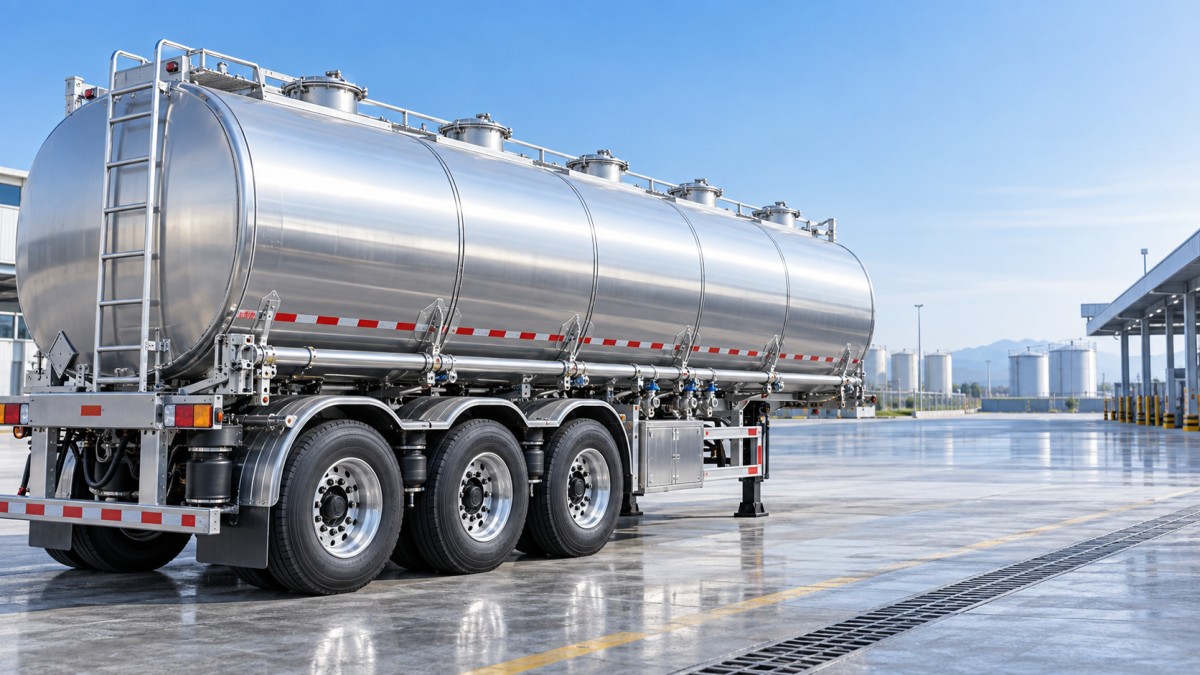
For buyers considering a lightweight, compartmentalized tanker, the 40 m³ 5-Compartment Aluminum Alloy Oil Tanker Semi-Trailer illustrates how specification choices build into the final price. Its 5454 aluminum alloy construction is intended to reduce weight compared with conventional steel construction, while the 40,000-liter, five-compartment format supports separate fuel deliveries. The configuration includes three 13-ton axles, 11R22.5 tires, tri-axle air suspension, ABS, full-body lifting, and a rear lift axle.
That does not mean every operation needs this exact package. A distributor operating mostly on paved highway routes with predictable single-product loads may prioritize a simpler configuration. Conversely, a fleet serving remote stations across rougher roads may find that suspension quality, axle support, and robust safety systems deserve a larger share of the budget.
The purchasing decision should end with route reality
Before approving an oil tanker trailer price, procurement teams should bring operations, maintenance, and safety personnel into the discussion. Review the cargo type, annual mileage, road surfaces, loading infrastructure, legal weight limits, workshop capability, and availability of tires, brake parts, and axle service. The most suitable tanker is not necessarily the least expensive unit or the one with the longest option list. It is the one whose tank material, running gear, and safety systems fit the revenue route—and can stay dependable throughout its working life.
Get Quote Form
Please complete the form below, and our product experts will contact you within one business hour. All inquiry details are kept strictly confidential and used solely to provide you with a precise solution.
✅ 24/7 Engineer Online Support | Ready for any technical inquiries.
✅ Full Export Documentation Support | We provide full set of shipping documents to ensure smooth customs clearance.
LOGO
This stunning beach house property is a true oasis, nestled in a serene coastal community with direct access to the beach.
Opening Hours
Monday - Friday : 9AM to 5PM
Sunday: Closed
Closed during holidays
Contact
+18888888888
hezuo@eyingbao.com123 West Street, Melbourne Victoria 3000 Australia
Request a Free Quote Today
Need mainstream models or custom specs? Our engineers are ready.
Contact us today for a lasting partnership!