


Products
News
- ▶ How a 42 m2 Carbon Steel Fuel Tanker Supports Depot-to-Station Deliveries
- ▶ Managing Sloshing Risk in 42 m2 Single-Compartment Fuel Tanker Operations
- ▶ Carbon Steel Tank Protection Requirements for 42 m2 Fuel Tanker Trailers
- ▶ Single-Compartment Fuel Tankers: When Higher Payload Improves Fleet Economics
- ▶ Is a 42 m2 Single-Compartment Carbon Steel Fuel Tanker Right for Bulk Hauls?
How a 42 m2 Carbon Steel Fuel Tanker Supports Depot-to-Station Deliveries
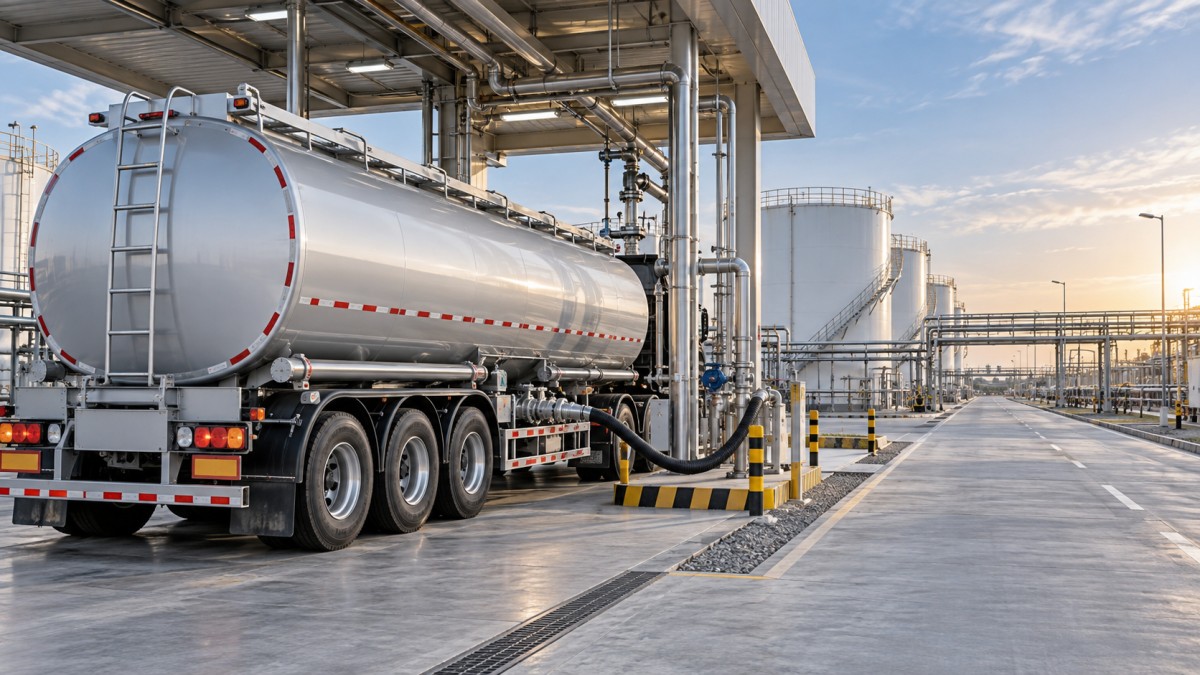
A 42 m2 Single-Compartment Carbon Steel Fuel Tanker is most useful when a delivery project moves one fuel grade in substantial, predictable volumes from a depot to a network of service stations. The value is not simply its tank size. It is the ability to turn a recurring depot-to-station route into a repeatable operating cycle: load one product, travel with a stable payload plan, discharge at scheduled stations, return, inspect, and load again.
For a project coordinator, this simplifies planning only when the route, station storage capacity, road conditions, and unloading process are aligned. A tanker that is too large for station tanks or urban access points can create delays. A tanker that is too small for the route can raise the number of trips and make supply interruptions more likely. The right decision starts with the delivery system, not the trailer specification alone.
Why a Single-Compartment Tanker Fits Bulk Fuel Routes
The main operational difference between a single-compartment tanker and a multi-compartment unit is product flexibility. A single compartment carries one product per trip. That can be a limitation for mixed station orders, but it is often an advantage on dedicated fuel routes.
When the delivery plan is focused on one fuel grade, the vehicle does not need compartment-by-compartment loading, allocation, and discharge management. Depot staff have a simpler loading sequence, drivers have fewer product-handling decisions, and dispatch teams can plan each trip around a clear volume. This is particularly practical when several stations on the same route need the same fuel product.
The design also reduces the chance of an avoidable planning error: assigning a mixed-load tanker to a route where one product demand is much higher than the others. With a multi-compartment trailer, one compartment may empty early while another returns partially loaded. A dedicated single-compartment fuel tanker avoids that imbalance when demand is consistent.
It is not the right answer for every distribution model. If one trip must routinely replenish petrol, diesel, and other products at one or two small stations, separate compartments may be more suitable. The single-compartment approach works best where bulk demand and product segregation are already established in the delivery plan.
Capacity Must Match the Whole Delivery Chain
The “42 m2” designation is commonly used in market descriptions of this tanker category, but project decisions should be based on the approved usable volume, payload limits, and legal operating conditions for the intended route. Tank capacity alone does not define how much fuel can be carried on every trip. Fuel density, axle loading, tractor configuration, road restrictions, and local transport requirements all affect the permissible operating load.
A practical way to assess the tanker is to map the delivery cycle before purchasing or assigning equipment:
- Identify the fuel grade carried on the route and the expected delivery quantity per cycle.
- List each station’s available receiving capacity rather than its total installed storage.
- Check whether access roads, turning space, canopy height, and unloading points can accommodate the tractor-trailer combination.
- Estimate whether one full load can be discharged safely across the planned stops without exceeding any station’s receiving limit.
- Review depot loading windows and station unloading windows, since waiting time can undermine the benefit of a larger tank.
The frequent mistake is treating a high-capacity tanker as an automatic productivity upgrade. It only improves productivity when the receiving stations can accept the delivery volume on schedule. Otherwise, the trailer becomes a mobile storage unit waiting for tank space, site access, or paperwork clearance.
What Carbon Steel Changes in Daily Fleet Use
Carbon steel is widely used for fuel tanker bodies because it provides a robust, serviceable structure for petroleum transport applications. For projects operating over rougher road surfaces, long intercity routes, or demanding depot environments, structural durability and repair practicality can matter as much as initial purchase cost.
That does not mean material choice should be treated as a standalone decision. The tank body, weld quality, internal cleanliness, protective coating system, piping layout, suspension, braking equipment, and support from the maintenance network all influence service life. A strong shell cannot compensate for neglected valves, damaged seals, poor earthing arrangements, or inadequate inspection routines.
For fuel distribution, the project team should specify the operating environment clearly. Routes with heavy dust, seasonal rain, uneven pavement, or long distances between service facilities may justify stronger attention to underbody protection, component accessibility, spare-parts availability, and suspension configuration. These details affect downtime more directly than cosmetic specifications.
Delivery Reliability Depends on Loading and Unloading Discipline
A tanker supports station supply only when it moves safely and predictably through each handover point. The most effective projects standardize the work around three moments: depot loading, road transit, and station discharge.
At the depot
The loading procedure should confirm product identity, intended quantity, tank condition, valve status, and documentation before the vehicle leaves. A single-compartment tank makes product assignment easier, but it does not remove the need for disciplined verification. The route should be confirmed against the load so dispatch does not send a bulk diesel load to stations expecting a different product or lacking available receiving volume.
On the road
Fuel movement introduces dynamic forces inside the tank. Drivers need a route plan that accounts for surface quality, gradients, congestion, and safe stopping locations. Travel time should include realistic buffers for controlled entry at depots and stations, not just driving distance. Consistently late deliveries often begin as unrealistic dispatch schedules rather than driver performance problems.
At the station
Before discharge, the receiving tank must be identified and checked for available capacity. The unloading area must support controlled positioning, hose handling, grounding procedures, and communication with station staff. A larger tanker can serve multiple stations efficiently, but only if the discharge sequence is planned around actual station demand. Changing the stop order halfway through a route may leave insufficient volume for a priority station or create an unnecessary return trip.
Where This Tanker Configuration Is Most Suitable
A 42 m2 single-compartment carbon steel fuel tanker is generally a strong operational fit in several situations:
- Dedicated diesel or petrol supply routes serving stations with relatively stable demand.
- Depot-to-station projects where one product dominates the daily or weekly distribution plan.
- Regional delivery networks with enough station storage to receive bulk drops.
- Fleet operations that prioritize repeatable loading and discharge routines over mixed-product flexibility.
- Expansion projects adding new stations along established transport corridors.
It is less suitable where each delivery must carry several fuel grades, stations have limited receiving capacity, or access conditions force smaller vehicle combinations. In those cases, a multi-compartment tanker, a lower-capacity unit, or a different route structure may produce more reliable deliveries even if it carries less product per trip.
Specifications That Deserve Attention Before Procurement
Project teams often focus first on tank volume and axle count. Those are important, but the specification review should go further. Confirm the compatibility of the kingpin and tractor unit, the selected suspension for route conditions, brake configuration, tyre availability, landing gear capacity, manhole and valve layout, discharge system arrangement, and access for routine inspection.
Also separate fuel transport requirements from other liquid transport requirements. Tankers are purpose-built around the properties of the cargo. For example, an insulated food-grade unit such as the 20 m³ Stainless Steel Insulated Milk Tanker Truck is designed for milk transport using 316L stainless steel and multiple compartments; it is not a substitute for a petroleum tanker. The comparison is useful because it highlights a basic procurement rule: tank material, compartment layout, insulation, and fittings must follow the liquid being carried and the cleaning or handling method required.
Shandong ORNN Vehicle Co., Ltd. manufactures tanker trailers and other semi-trailer equipment for fuel, chemical liquid, general cargo, and heavy-equipment transport. For fuel distribution projects in East Africa, West Africa, and Saudi Arabia, the practical starting point is a route-and-duty specification: product type, expected operating load, tractor interface, road environment, depot process, station access, and maintenance support. That produces a tanker configuration that fits the delivery operation instead of a generic capacity target.
Use the Tanker as Part of a Distribution Plan
The strongest case for this fuel tanker configuration is not “more volume” in isolation. It is fewer avoidable delivery disruptions on a route that consistently moves one fuel product. When capacity matches station receiving limits, carbon steel construction matches operating conditions, and loading and discharge procedures are controlled, the tanker becomes a dependable part of the depot-to-station supply chain.
Before finalizing a purchase or deployment plan, build one representative route sheet with depot loading time, station order, expected discharge volume, access constraints, return timing, and inspection points. That single exercise will usually show whether a large single-compartment tanker will improve supply continuity or whether the network needs a more flexible distribution arrangement.
Get Quote Form
Please complete the form below, and our product experts will contact you within one business hour. All inquiry details are kept strictly confidential and used solely to provide you with a precise solution.
✅ 24/7 Engineer Online Support | Ready for any technical inquiries.
✅ Full Export Documentation Support | We provide full set of shipping documents to ensure smooth customs clearance.
LOGO
This stunning beach house property is a true oasis, nestled in a serene coastal community with direct access to the beach.
Opening Hours
Monday - Friday : 9AM to 5PM
Sunday: Closed
Closed during holidays
Contact
+18888888888
hezuo@eyingbao.com123 West Street, Melbourne Victoria 3000 Australia
Request a Free Quote Today
Need mainstream models or custom specs? Our engineers are ready.
Contact us today for a lasting partnership!