


For business evaluators, oil tanker trailer price trends matter because the quoted figure reflects far more than tank volume, supplier margin, or delivery distance.
Material markets drive major changes, but component specifications, compliance scope, and lifetime operating exposure determine whether an apparently lower quotation is genuinely competitive.
Start With the Cost Drivers That Actually Change a Quote
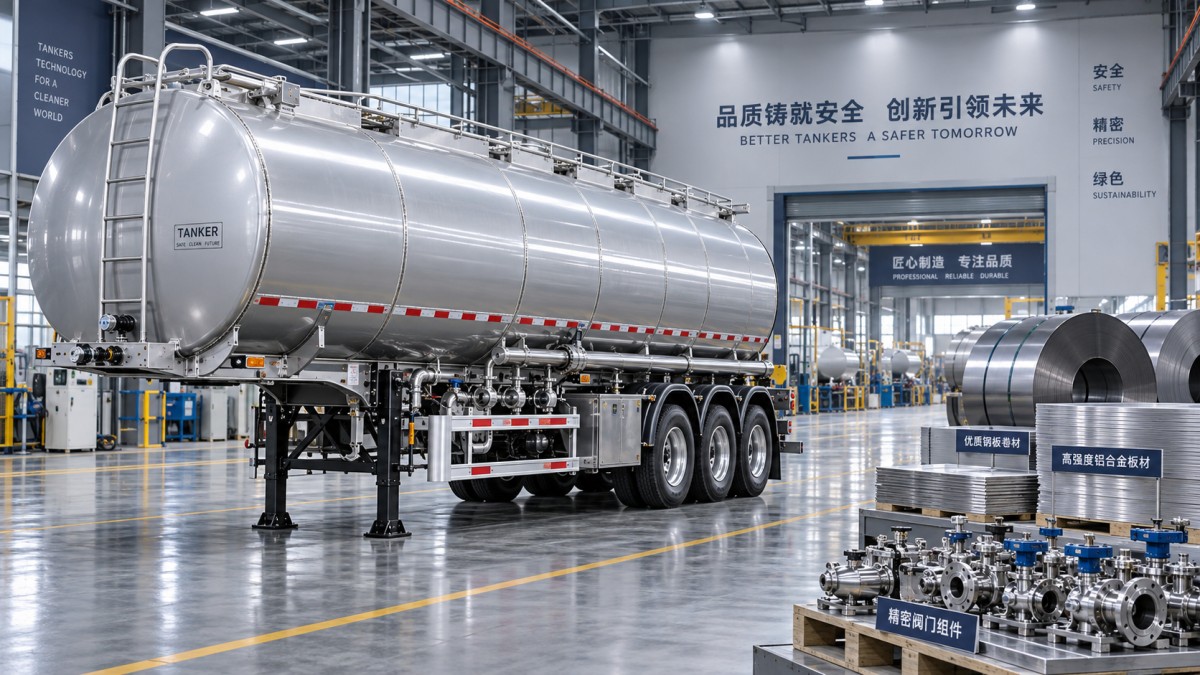
The core buying question is not whether prices are rising or falling. It is which cost movements affect the exact tanker configuration being evaluated.
For a conventional fuel tanker, tank material, fabrication labor, running gear, safety equipment, and transport logistics usually account for the largest quotation differences.
Steel prices can move quickly, especially where plate availability, mill lead times, currency changes, or local infrastructure demand tighten the supply chain.
Aluminum pricing follows a different pattern, influenced by global commodity markets, energy-intensive smelting capacity, premium alloy availability, and regional import conditions.
However, raw material movements do not transfer directly into every oil tanker trailer price. The effect depends on material weight, tank design, and when suppliers purchased inventory.
A buyer comparing quotations should request a clear specification basis, including tank material grade, shell thickness, end plate thickness, and quoted component brands.
This approach separates a legitimate market-driven change from a quote that is lower simply because essential construction or safety details were omitted.
How Carbon Steel Costs Influence Fuel Tanker Economics
Carbon steel remains a practical option for many fuel distribution fleets because it combines established fabrication methods, structural strength, repairability, and accessible service support.
When plate steel rises, the effect is substantial because the tank shell, end plates, internal partitions, frames, brackets, and protective structures all consume steel.
Thickness matters as much as the published steel price. A thinner shell reduces initial material use, but may affect durability, repair tolerance, and acceptance requirements.
Evaluators should compare actual kilograms of steel where possible, rather than accepting broad descriptions such as “heavy-duty tank” or “standard carbon steel construction.”
For example, the 42 m³ Single-Compartment Carbon Steel Fuel Tanker specifies a 5 mm carbon steel tank body and 6 mm carbon steel end plates.
Those dimensions provide a measurable basis for comparing like-for-like offers, alongside its 42,000 L capacity, three-axle arrangement, and specified 50# bolt-on kingpin.
Steel market volatility should therefore be reviewed against the tank’s documented build weight, not treated as a blanket justification for any supplier price increase.
Why Aluminum Can Cost More Upfront Yet Change Fleet Economics
Aluminum tanker trailers generally command a higher acquisition price because suitable alloys, specialized welding, fabrication controls, and repair expertise cost more than standard steel production.
That premium can be commercially justified where payload sensitivity is high, corrosion conditions are demanding, or repeated long-haul operations reward lower tare weight.
A lighter trailer may allow additional legal payload, subject to local gross vehicle weight limits, tractor configuration, route restrictions, and product density.
The financial value depends on utilization. A high-frequency route with consistent payloads can recover a tare-weight advantage faster than an occasional regional delivery operation.
Aluminum also changes maintenance planning. It resists corrosion well, but damage repair may require trained technicians, compatible materials, and more specialized workshop capability.
Business evaluators should model purchase price, annual payload opportunity, fuel consumption, corrosion exposure, repair network coverage, and expected resale value together.
Choosing aluminum solely because it is lighter, or steel solely because it is cheaper, overlooks the operating conditions that determine the real return.
Components Often Explain the Gap Between Similar Prices
Two tanker trailers with matching capacities can have materially different prices because axles, suspension, tires, valves, piping, pumps, meters, and electrical systems vary widely.
Axle selection affects both initial expenditure and uptime. Recognized axle brands, appropriate load ratings, and readily available spare parts may reduce long-term interruption risk.
Suspension choice also matters. Mechanical suspension can suit robust operating environments, while air suspension may improve ride quality and equipment protection where applicable.
Fuel tanker safety systems deserve close attention because they affect compliance, delivery control, emergency response, insurance discussions, and the consequences of equipment failure.
Ask whether the quotation includes manholes, emergency shutoff valves, vapor recovery provisions, bottom loading equipment, API connections, discharge valves, and calibrated metering systems.
Imported components may add cost through currency exposure, customs duties, lead times, and after-sales availability, especially for fleets operating across East or West Africa.
A low quotation without named component brands, model numbers, or technical data should be treated as incomplete until the evaluator confirms equivalent performance and support.
Capacity, Compartments, and Compliance Change the Build Cost
Tank capacity affects more than shell size. Larger volumes can require different structural design, axle loading calculations, chassis reinforcement, braking capacity, and route-specific operating approvals.
A single-compartment tanker is usually simpler to fabricate and operate than a multi-compartment model, but it offers less flexibility for distributing different fuel grades.
Multi-compartment designs increase fabrication complexity through internal bulkheads, separate piping, valves, discharge arrangements, and potentially more detailed calibration requirements.
Buyers should not assume a higher-capacity tanker delivers a lower cost per liter in every market. Legal payload limits may prevent full utilization.
Regional requirements can substantially alter the oil tanker trailer price. Standards for braking, lighting, reflective markings, grounding, fire equipment, and tank testing differ by destination.
Saudi Arabian, East African, and West African projects may also differ in customer inspection practices, documentation expectations, port procedures, and local registration requirements.
The right comparison is therefore a delivered, compliant, ready-to-operate cost, rather than an ex-factory price that excludes destination-specific work.
Use a Transparent Quote Comparison Method
Request each supplier to quote against one written specification. This is the most effective way to prevent a comparison between visually similar but technically unequal trailers.
The document should list capacity, compartment count, material grade, shell thickness, axle rating, suspension type, tire specification, brake system, and safety equipment.
It should also identify included accessories, paint system, testing documents, spare parts, warranty coverage, production lead time, shipping terms, and installation responsibilities.
Separate one-time costs from recurring risks. A cheaper trailer may create greater expense through reduced payload, earlier corrosion work, unavailable valves, or longer service downtime.
Ask suppliers when their material pricing was established and how long the quotation remains valid. This is especially important during periods of commodity volatility.
For large orders, consider agreeing a defined price-validity period or a documented adjustment mechanism tied to clearly identified steel or aluminum market benchmarks.
Do not accept vague escalation clauses. A commercially useful clause names the material basis, adjustment timing, threshold, evidence required, and maximum buyer exposure.
Evaluate Total Cost of Ownership Before Selecting a Supplier
Initial price remains important, but it is only one part of the investment case. The more reliable decision measures cost across the planned service life.
Include acquisition cost, freight, import charges, registration, insurance, maintenance, parts availability, expected payload, fuel use, financing expense, and residual value in the model.
Also estimate the cost of unplanned downtime. For fuel distributors and liquid transport operators, a parked tanker can disrupt contracted deliveries and customer relationships.
Manufacturer experience and technical responsiveness affect this risk. Detailed drawings, inspection records, traceable components, and accessible after-sales support can protect fleet availability.
Before ordering, verify the supplier’s capacity to build the specified configuration consistently, provide inspection evidence, and address practical maintenance requirements in the destination market.
A supplier that explains cost changes with documented materials and components gives evaluators better control than one offering only a final number without technical support.
Conclusion: Price Trends Should Improve Decisions, Not Delay Them
Oil tanker trailer price trends are best understood as a combination of material costs, configuration choices, compliance demands, component quality, and lifecycle operating economics.
Steel and aluminum movements matter, but they should be assessed against actual tank construction, route utilization, legal payload, service capability, and expected fleet lifespan.
For business evaluators, the strongest decision comes from a specification-led comparison that tests every quotation for completeness, compliance, durability, and operating value.
That process makes it possible to identify a tanker trailer that is competitively priced today while remaining dependable, supportable, and commercially productive throughout its working life.